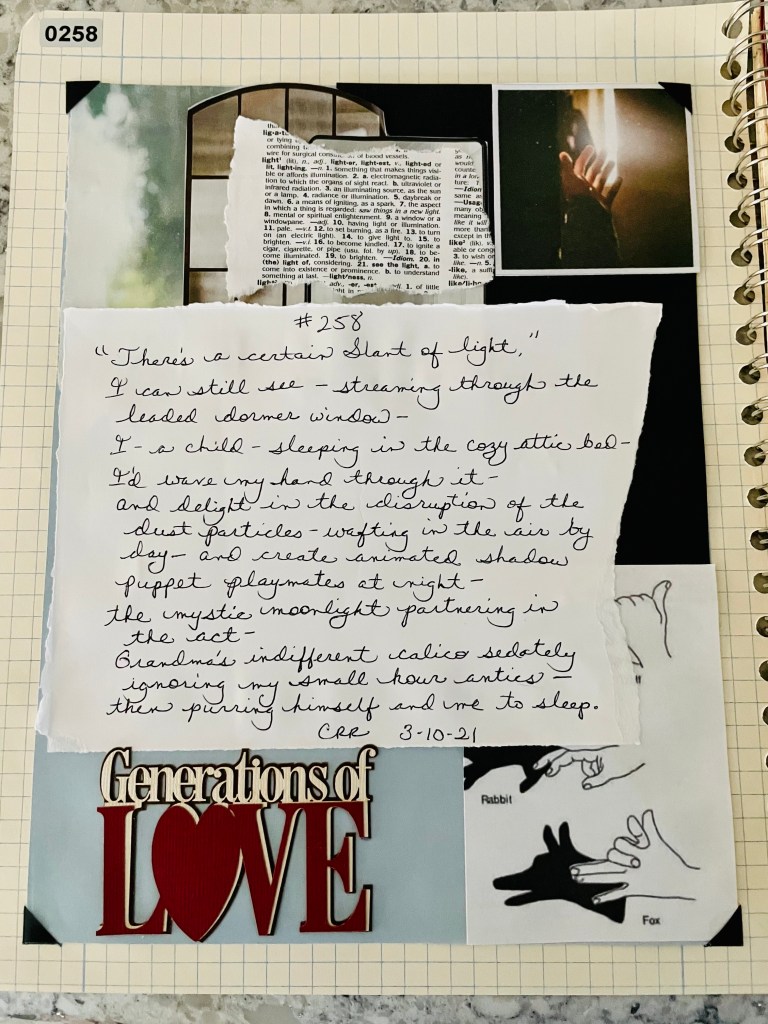
Light carries so much symbolism, with our greatest source of it, the Sun, being one of the two things that all of life on our planet depends on. It illuminates and nourishes and without it, from plants to humans, life would quickly die off. In Emily’s poem, she used multiple literary devices and has the unknown speaker addressing the themes of despair, religion, nature, truth and transformation, all emanating from a certain slant of light streaming in or through. My poem is definitely less ambiguous and uncomplicated. It’s a nostalgic poem that I wrote by traveling in my mind back more than half a century. Well, that makes me sound ancient, doesn’t it! LOL
I have the fondest memories of sleeping in the attic bedroom at my maternal grandparent’s home in Virginia. Growing up, I spent most weekends and school vacations there. Beginning in 1946, my mother and her 3 sisters shared that room from the time the youngest was 2 until each one of them got married. I was born into that house and spent the first 22 months of my life there. Filled with memories, both literally and figuratively, it was a sweet haven that brought me lots of joy.
I’ve lived in a lot of places since then, (and I do mean a lot- 34 houses/apartments in my lifetime) but that house, my first home, I can still see it today in amazing Kodachrome detail. The smells, the sounds, the tastes, all like it was yesterday in my mind. The black and white parquet kitchen floor and the red table, where everything served tasted like love. The exact way the screen door sounded whenever anyone came in or went out. The white muslin cloth that was draped over the butter, sugar bowl and condiments that stayed there in between meals. Grandma standing by the woodstove, cooking Chicken Pot Pie or venison she or Pappy had hunted. Swinging on the porch swing with my Aunt Lou. Playing on Pappy’s car lift or rolling around on the garage creeper. Getting happy dirty and washing my hands in the garage sink with Gojo. Feeling safe and loved under Grandma’s quilts in the cozy attic bedroom my own mother grew up in. Being proud when I was finally big enough to go to the hen house by myself and get the eggs for breakfast. Digging potatoes in the garden and being sent down to the earthy cool root cellar for vegetables, pickles or sauces that had been canned and put up for the winter. Snapping beans, making butter, and enjoying a cool slice of sweet watermelon or hand churned ice cream outside on a hot summer day. Although my grandparents are both gone now and the house looked nothing like it used to when I drove by it 10 years ago, until their deaths it was the one place on Earth that stayed constant in my life, when it seemed like almost nothing else did. It always felt like my true home.
Perhaps this brought back some of your own memories of growing up. Hopefully you all have a place like this that you remember fondly.
I commented about self-censoring on another poet’s post today. He had admitted being hesitant to hit the publish button on a certain post of his. We writers engage in a lot of self talk, especially when the subject matter we take on is sensitive, political, controversial, etc., etc. There’s the innate need for us to create the work, to write the words, to say the things, and then there’s the need for an audience, if we actually choose to publish our work. And the audience is a huge gamble we have to be willing to take.
Dear Readers, I have to admit that I am not a Dickinson scholar, although that is now one of my goals, and something I’m working at daily. When I choose a first line of hers to use as a prompt, my process is that I write my poem and then go back and research analyses of hers, to perhaps see how my poem’s theme relates to the body of her work. The question for this poem was “Did Emily ever address current events?” The answer, like her work is elliptical and cloaked.
Emily Dickinson was most prolific during the years of the Civil War. Scholars have deemed a small group of her poems, “War Poems”. But unlike the other “Titan of American Poetry” – Walt Whitman, she told her war stories “slant”, working around the truth, and indirectly leading you to the center of it, gradually. That’s not what I did with this poem though.
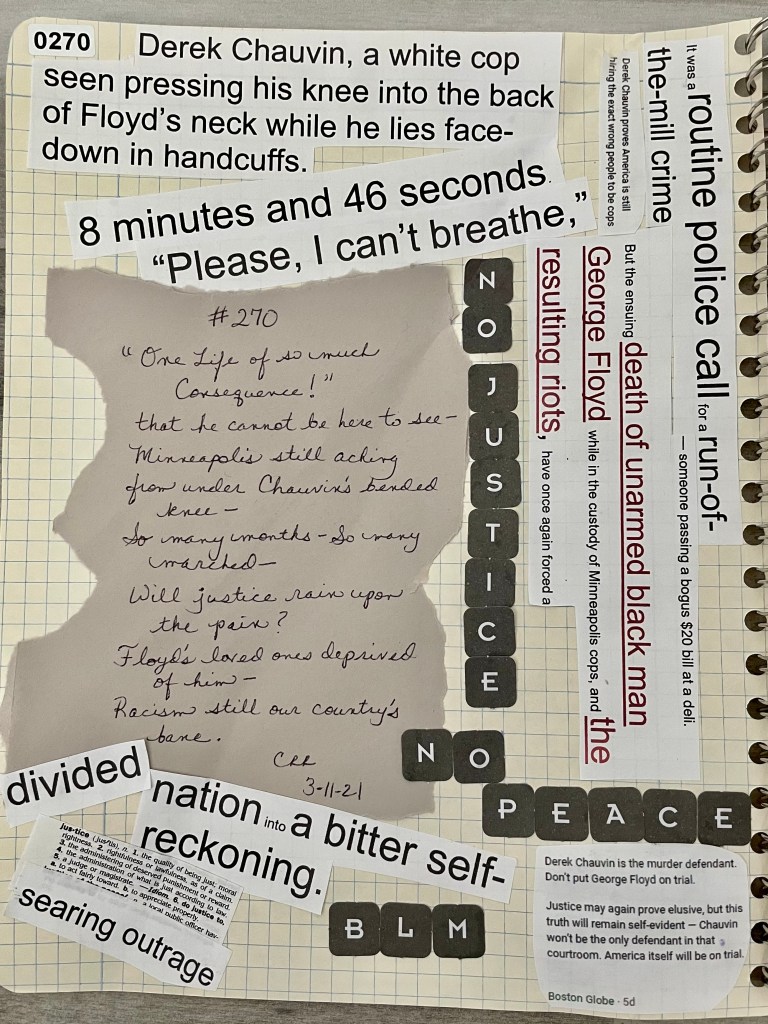
My take on #270 is very timely, as the jury selection is presently occurring in Minneapolis, Minnesota, for the Derek Chauvin trial for the murder of George Floyd. “One life of so much consequence” could absolutely have been written in another vein, about Derek Chauvin. I had a conversation with myself about posting it here. But as I wrote this poem, I was also reminded about how each one of us is a “life of so much consequence”. We touch so many others every day. The Butterfly Effects of our words and our actions are often monumental and far reaching, through generations and miles. We would do well to remember that.
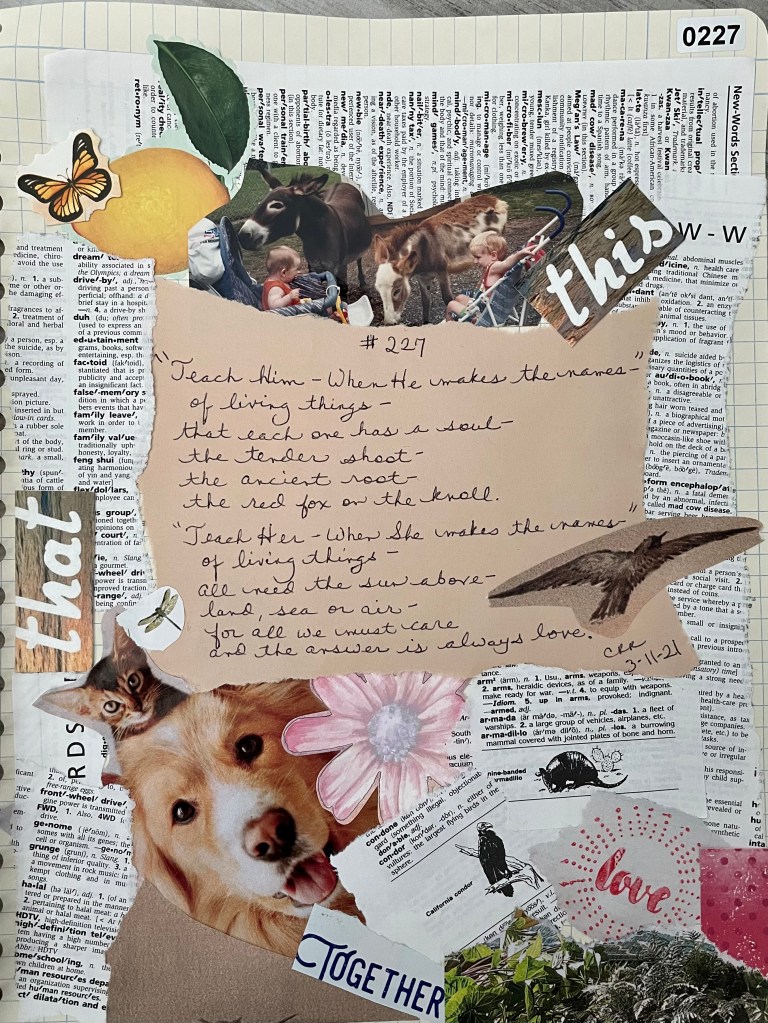
Today’s share is short and sweet. It’s a poem about teaching children the interdependence of all life on Earth. As we teach them the names of living things, we are hopefully teaching them about our relationship to them, theirs to each other, and the unique place each occupies in the web of life. As the renowned Italian Educator Maria Montessori taught, each living thing has a “cosmic task”, a reason for being. When we fully understand that, we can be the caretakers that we are called to be, of the environment and all of its inhabitants.
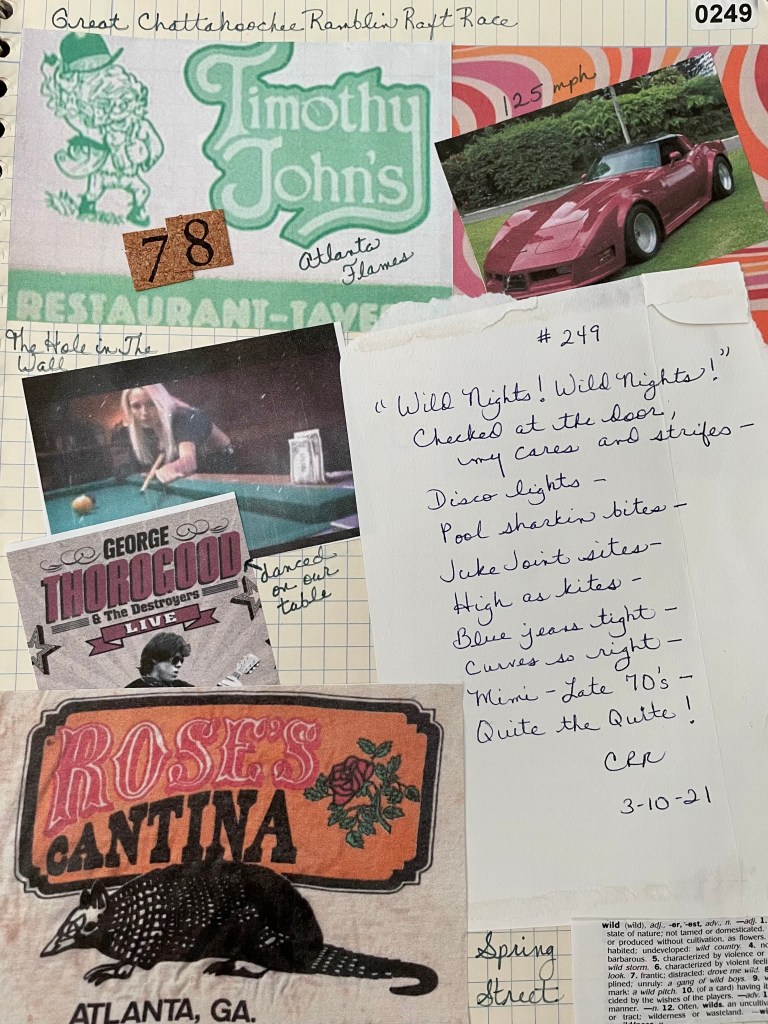
I share one poem per blog post, but I’ve written many more. The lucky agent/publisher who decides I’m a good fit for their press will get to read all of the poems I’ve written with Emily’s first lines for this project! This morning I wrote about childhood memories in my grandparent’s attic bedroom, the interdependence of all living things, the hate I have for the scale at this point of my life, a certain type of friend we need and this one, about wild nights.
If Emily’s poem had truly been about a wild night she had or one she was desirous of, the mid 1800’s world she lived in would be “pull out the smelling salts” shocked. Ladies of that time period didn’t speak of such things. Hell, they weren’t even supposed to feel such things! Of course we don’t know if anyone actually did read it before her death, but even today it’s difficult to reconcile the reclusive poet to a such a passionate plea for wild nights with an unidentified lover. But who knows…
Now I may be a woman of a certain age with grown children and grandkids, but back in the late 70’s, (when I may not have always used the best judgement), I was nevertheless “Quite the Quite!
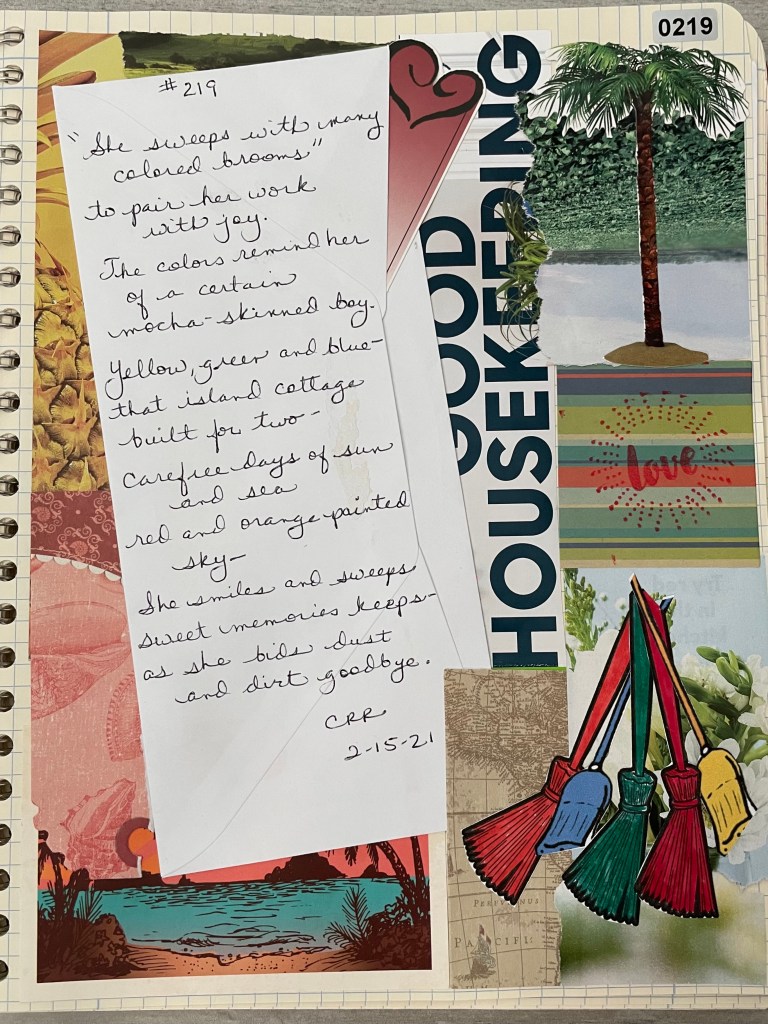
Although she isn’t here to verify it, if you Google poem 219, every analysis points to Emily Dickinson describing a sweeping multicolored sunset and referring to it as a housewife. She began the poem with a figurative first line. I took the opposite approach and quite literally made it a simple and sweet poem, about a woman, going about her daily chores with colored objects that remind her of a loved one, lost long ago. The different colors of the brooms remind her of specific things about their life together. A life that existed in the past, but one that she remembers fondly.
We all have objects, places, songs, as well as colors, scents and foods that remind us of someone we loved. Just seeing, hearing, or tasting them brings the moments we shared with them back to life in our minds. In today’s Carol and Emily poem, I was reminded of the fact that there is dignity in all work, and that we can choose to do even the most mundane tasks with utmost effort, pride and joy, focusing on whatever it is that makes us whistle while we work and bid that dust and dirt goodbye.
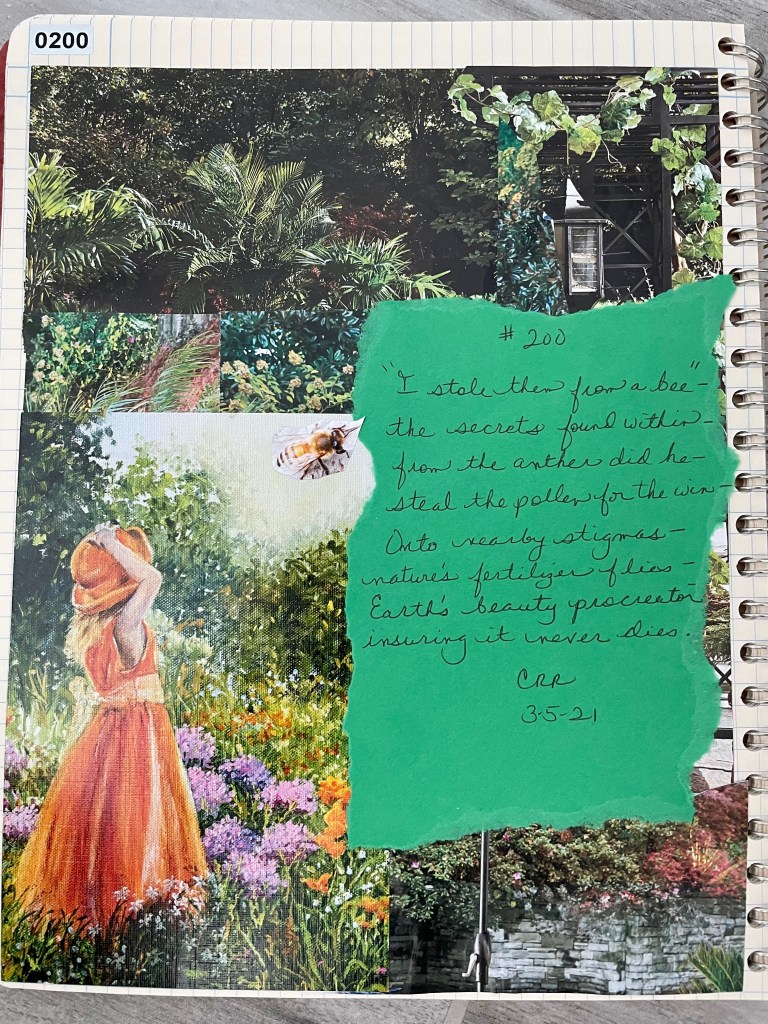
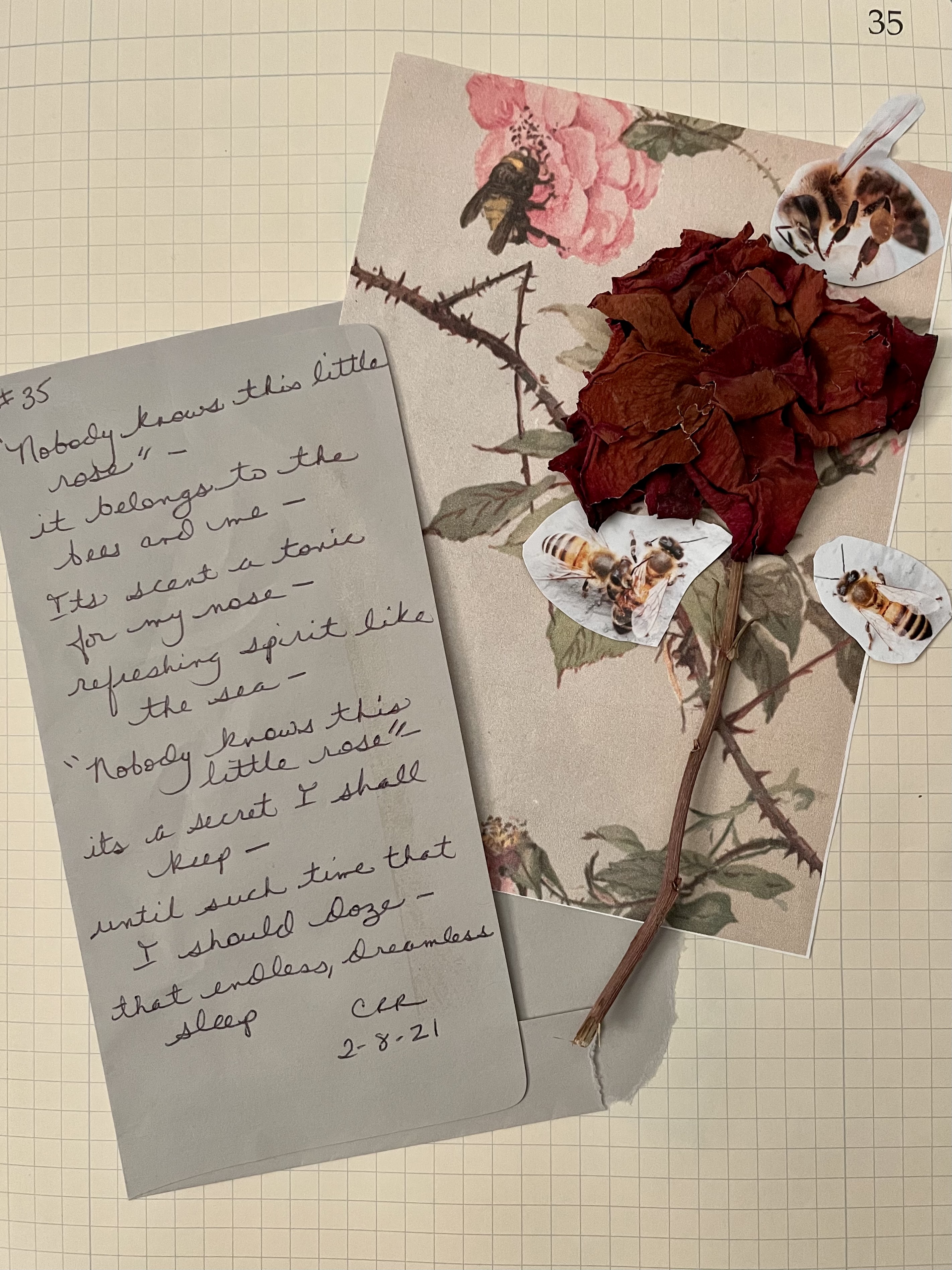
According to the Emily Dickinson Archive, there are 280 instances of bees in poems written by her. There is plenty of analysis out there regarding her personification of bees and flowers etc. and how it speaks of gender conventions, religion and eroticism, but that’s not what this blog is about. It’s widely accepted that she loved nature and spent quite a lot of time by herself in it, thus why so many of her poems contain references to the natural world. Emily no doubt knew of the bee’s importance in contributing to biodiversity, creating a food source, and as pollinators facilitating wild plant growth. Bees are also said to pollinate one-third of the global food supply, more than 90 different agricultural crops.
Like Emily, I find great beauty and solace in nature. It has many valuable lessons and secrets to teach us if we take the time to observe the cycles, habits, and behaviors of other living things. One might surmise that Emily preferred the natural world over human beings, especially toward the end of her life when she became more reclusive. I submit that she sincerely appreciated the contributions of the natural world to the beauty of our planet and took the time to write about it.
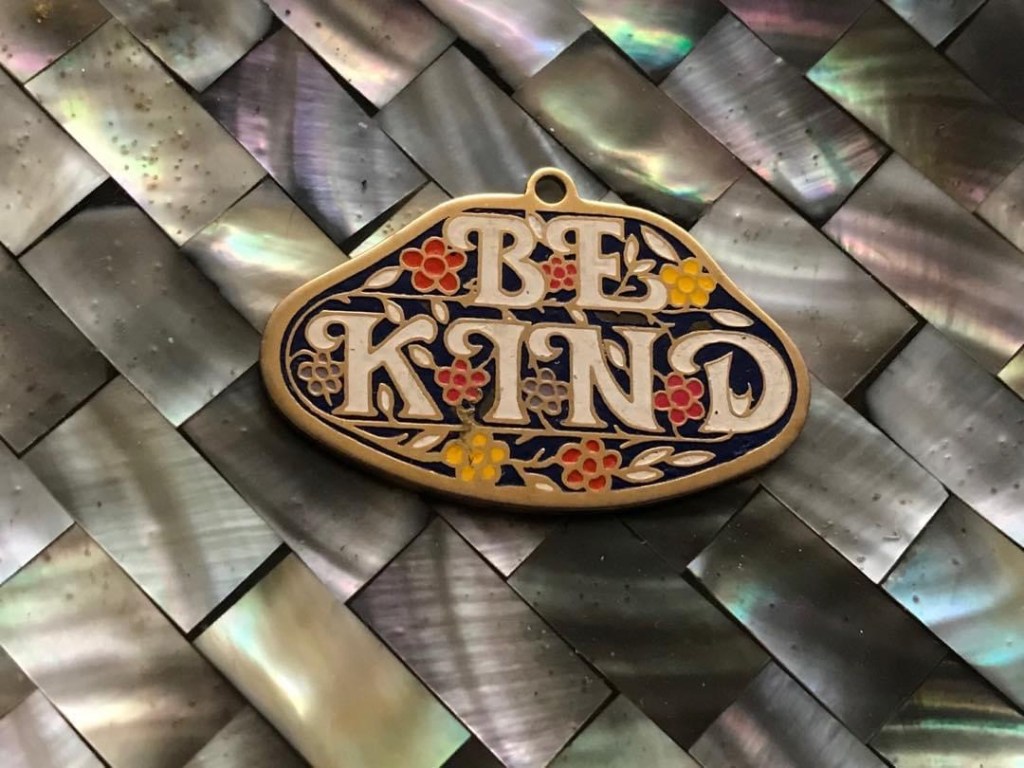
This photo came up as a serendipitous Facebook memory this morning. Serendipitous because I just finished a poem about kindness yesterday, with the intent of posting it today. This “Be Kind” pendant is one of the few relics I have from my teenage years. Three years ago I found it in a box of memories. Although it’s nearly 50 years old, its message is timeless. I remember buying it at The Infinite Mushroom, a really cool head shop in Orlando in the early 70s. It was where every teen went to get their black light posters, ultra-cool clothes/accessories, and of course the other things that made it a “head shop”.
Emily often sent poems as part of her letters or accompanying them, to family, friends and acquaintances. She wrote the first line of this poem in a letter to Samuel Bowles in August of 1858. Bowles was the Editor-In-Chief of the Springfield Republican newspaper. Over the years he became Emily’s confidant and would receive 40 poems in letters from her, but publish none of them. Seven of her poems were published in his paper during her lifetime, but the specifics of how they came to be published remain unknown.
Despite all the goodness and good people that are out there making the world a kinder place every day, today’s Carol and Emily poem recognizes the still ever present need for a “Kindness Revolution”. Because you can never have too much kindness or spread too much love.
In the Spring of 1862, Emily Dickinson wrote the words “The heart wants what it wants, or else it does not care” in a letter to her friend Mary Bowles. She was offering Mary consolation, as her husband was going abroad for an extended period of time. At the same time, Emily admits that there is really no way to console her friend, because the heart has a mind of its own and the friend’s husband will still be missed, even as she is assured of his return.
Throughout Emily’s 55 years she was never known to have a romantic relationship, but the letters she left behind suggest she did have several intimate relationships, which she “tells it slant” about in her poetry. “Tell it slant” was a phrase used in another poem of hers, whose first line is “Tell all the truth, but tell it slant” which seemed to suggest that rather than shocking a person with the whole big truth at once, one should start from a circuit around it and gradually reveal the whole picture. The phrase “tell it slant” has come to be associated with Dickinson and each year the Emily Dickinson Museum in Amherst holds a Tell It Slant poetry festival and gives a Tell It Slant award.
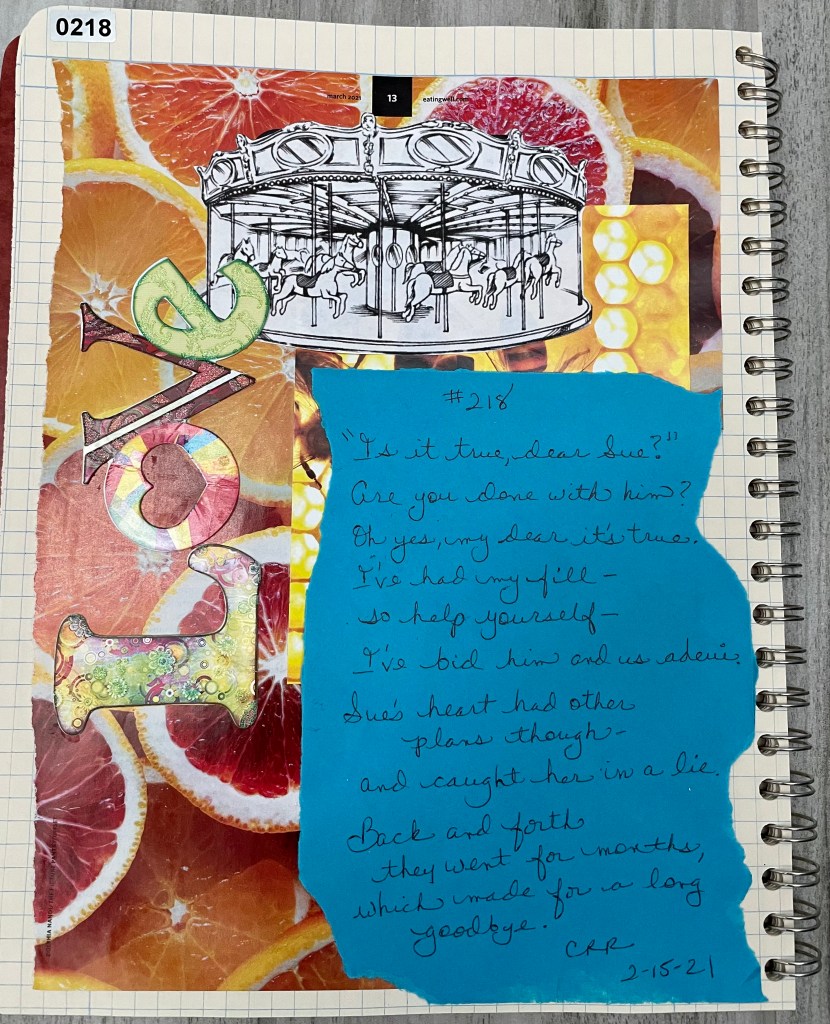
In researching analysis of “Is it true dear Sue?”, most agree that those words were directed to her lifelong friend, love and sister-in-law, Susan Huntington Gilbert with regards to Emily’s brother Austin, whom Sue would go on to marry. Emily is questioning whether or not there are now two who love her, and competing for her love.
Todays Carol and Emily poem is based on a real experience that I had at the end of a long term relationship, one that ended slowly, and slant, but led us both to where we belonged, with another.
“The world is round, and the place which may seem like the end, may also be the beginning.”
Remember that one day of the week in Kindergarten? The day you were allowed to bring that special object of yours and tell the entire class all about it and why it was special to you? That’s what writers do every day, whether they are poets or novelists, screenwriters or essayists, they tell stories and paint pictures with their words. Today happens to be International Writer’s Day, a day established to recognize and honor those who chose a lifetime of show and tell.
There’s a so called Golden Rule of Writing that says you should show instead of tell, by using sensory details that allow the reader to be immersed in the scene or emotion, as if they were there, experiencing the action or sensing a character’s personality traits. Emily was quite adept at explaining abstract concepts using imagery and concrete objects that readers could easily relate to. In other words, she was really good at show and tell. When I read her work, I get the feeling that like me, she viewed words as almost sacred conveyors of emotions, thoughts and stories. The following quote illustrates her understanding of the power they hold.
“I know nothing in the world that has as much power as a word. Sometimes I write one, and I look at it until it begins to shine.”
Emily Dickinson
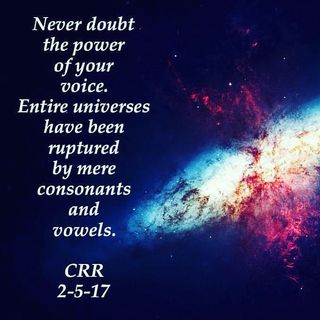
My quote about the power of words.
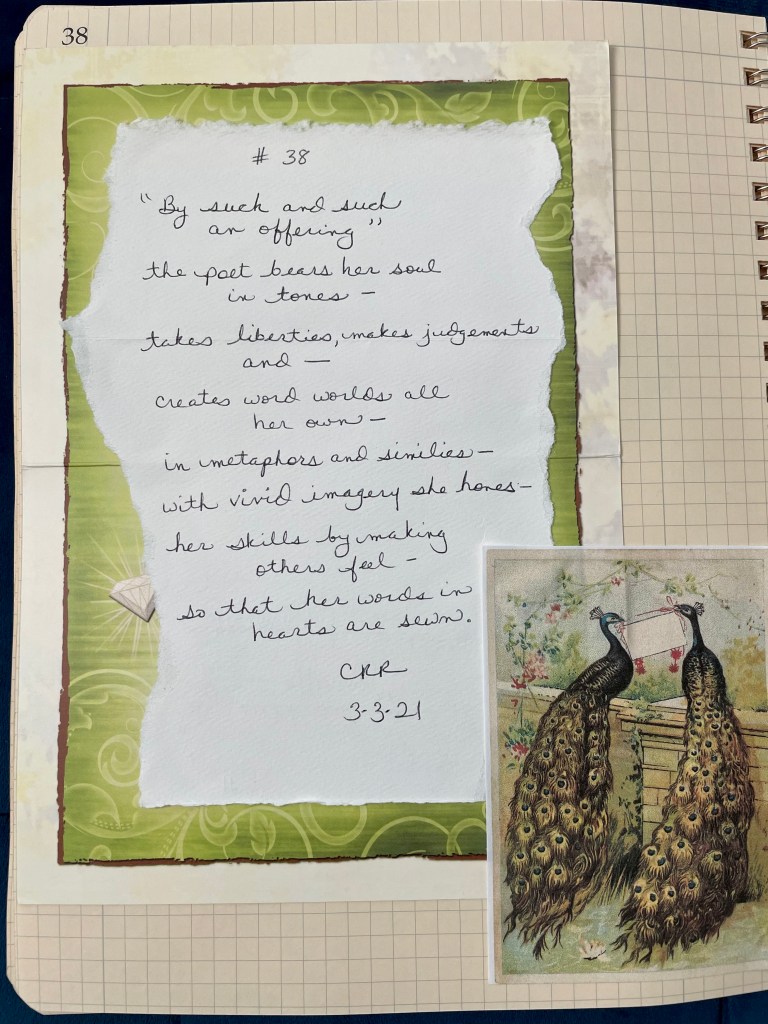
Today’s Carol and Emily poem is about words, writing, and the hope that in sharing our words, we writers touch hearts. And perhaps, some of our words even shine.
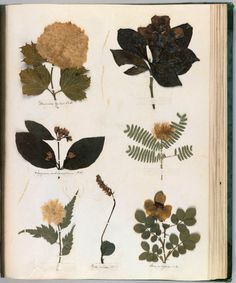
An avid observer, Emily Dickinson began showing an interest in botany when she was 9 years old. She loved to help her mother in the family garden, which contained quite an extensive variety of flowers. When she went away to school at Mt. Holyoke, she was encouraged by the principal and founder of the school to create an herbarium. Emily went on to collect, press and classify 424 flowers from the Amherst region. The leather bound album she pressed and posted them in survived and has been digitized by Houghton Library at Harvard University. You can access it here Harvard Mirador Viewer. You can also tour the Homestead gardens at Dickinson’s family home in Amherst, MA. Although I haven’t yet been, it’s definitely on my “post Covid – when we can finally travel safely again” list of places to visit.
Emily often sent flowers with her letters to friends and family and gifted them on birthdays and occasion of deaths and illnesses. A large number of her poems contain references to them. According to Judith Farr, author of The Gardens of Emily Dickinson, one-third of Dickinson’s poems and half of her letters mention flowers, with the rose taking first place for most mentions. Pictured below is a page from Emily’s Herbarium and today’s Carol and Emily poem, which tells of one particular rosebush that she kept as a secret for herself and the bees.


 The Carol and Emily Project