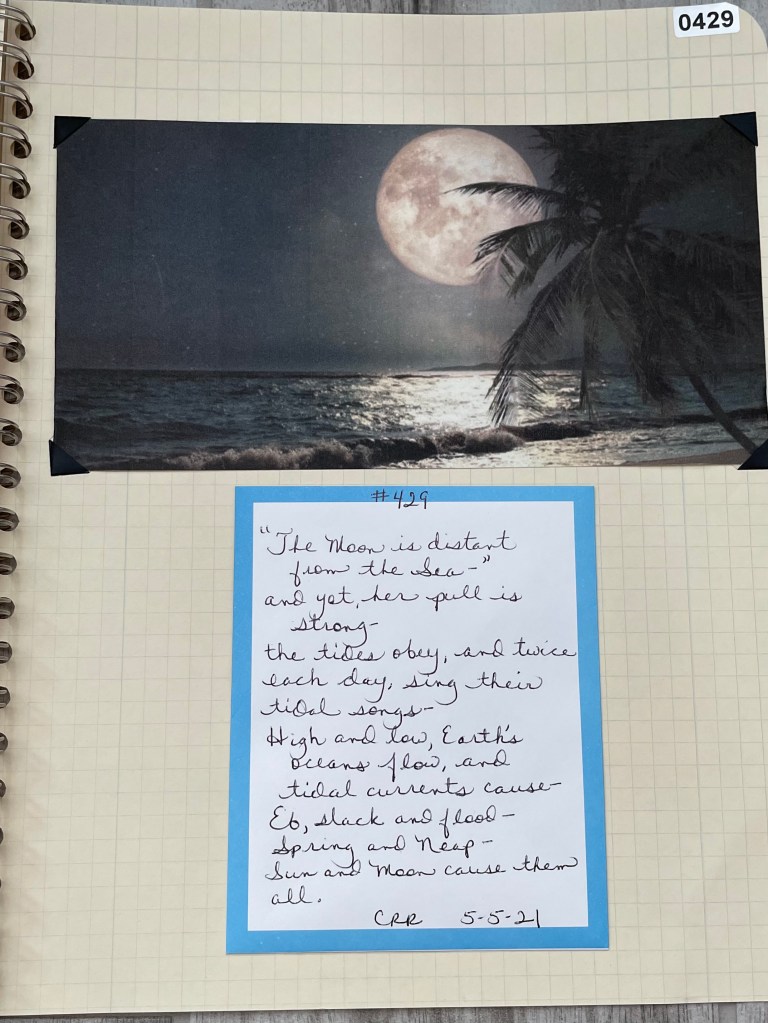
Very distant indeed. It’s an average of 238,855 miles from Earth. And yet, its gravitational pull makes it a mighty force. Orbiting Earth approximately every 27.3 days, it is the second brightest object in the sky, reflecting the light of our brightest, the Sun. Some analysts see poem #429 as a metaphor for Emily’s obedience to God and others see her likening the sea’s obedience to the moon to reversing women’s customary obedience to men. Given our shared aversions to joining the organized church, and to being told what to do by anyone, I lean toward the later interpretation.
As an elementary teacher, I loved to incorporate poetry into not just my language arts instruction, but into the other subjects I taught as well. One year my 3rd graders studied and memorized Frost’s “The Road Not Taken”. Another year I orchestrated a spoken word play of Paul Fleischman’s Joyful Noise, Poems For Two Voices, a delightful book of poems about all types of insects. When lesson planning, I often sought out poems about Math, Science and Social Studies and found them to be very effective tools for teaching all sorts of concepts.
Today’s Carol and Emily Project poem is a short and sweet poem illustrating the moon’s tidal force.
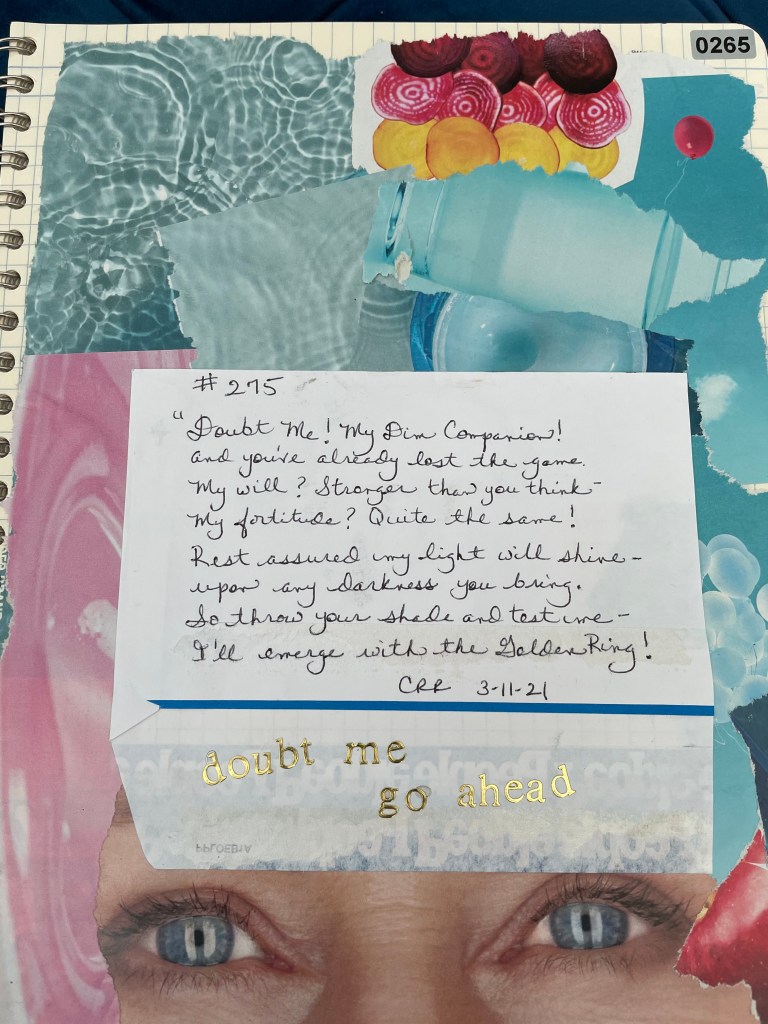
If you research analysis of Emily’s poem #275, you’ll find many in agreement that she is thought to be addressing a “love interest” and declaring that he should not doubt her feelings, her love for him. It’s somewhat hard for us to reconcile her speaking such words because although she maintained correspondence with several men, there is no proof that she actually consummated any of those relationships or took them any farther than the intimacy in her correspondence.
I have this thing about being doubted. I’m going to do everything in my power to show you why you shouldn’t have doubted me. A bit competitive, a bit of a rebel, I just have never liked being told I can’t compete, achieve, or do something I believe I can do. Believe me when I say there are a lot of things I can’t do anymore, or would never want to do, but you’d do well to believe that if I put my mind to something, you shouldn’t stand in my way. I hope I’ve instilled that same fight in my children and grands.
Written in a voice filled with confidence and the strength of a Mama Bear out to protect or provide for her cubs, today’s Carol and Emily poem challenges any dim companion that doesn’t heed that advice.
Spring is here! Well, at least officially on the calendar and definitely here in the South. Lilies and daffodils are stretching their arms, breaking free of their cool earthy beds and peeking up at the Sun. Swollen rivers are heartily flowing as snows melt and the brown ground begins to green. Tree leaves are budding and even the oceans begin to bloom, as waters are being warmed by Spring’s sunny serving of hopeful rays. Legions of Monarch Butterflies are leaving Mexico to begin their transcontinental journey to Canada, stopping to mate and delight us all along the way. Songbirds announce their return to warmer climes as a certain fever sets in and we open our windows to the sweet smells of Spring carrying the wastes of Winter away.
Emily Dickinson was an avid gardener from a young age and according to her letters and poems, an appreciative observer of nature all of her life. Her Herbarium, a collection, of 424 plants and flowers from the Amherst region, which she catalogued, classified and pressed into a leather-bound album, is certainly evidence of that. Dickinson celebrated them in a letter to her friend Abiah Root in 1848 referring to flowers as “beautiful children of spring,” She is said to have viewed nature as her muse, and I imagine that Spring was her favorite season.
“Some keep the Sabbath going to church; I keep it staying at home, With a bobolink for a chorister, and an orchard for a dome.” — Emily Dickinson
Poem #236
Like Emily, I get much of my inspiration from nature. I’m lucky to live on the coast and find much of it on the beach, which I like to say is my church, gym, and community service outlet, where I meditate, read, write, exercise and pick up litter.
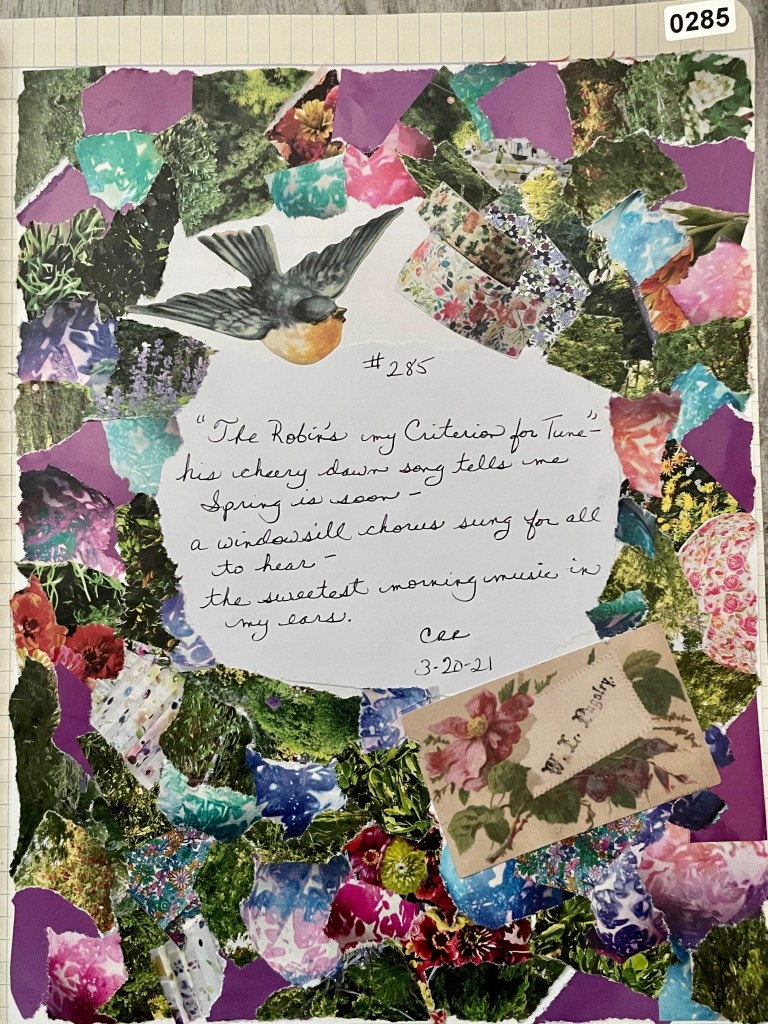
Todays Carol and Emily poem celebrates one of the signs of Spring, the Robin.
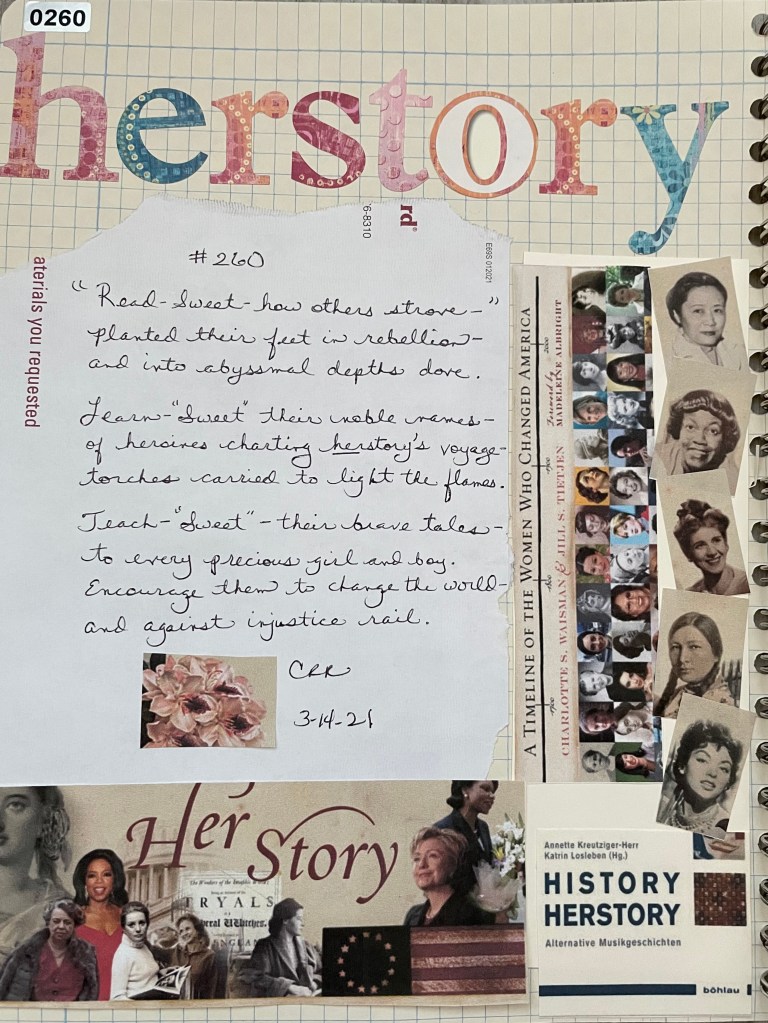
Emily Dickinson lived and wrote in a society that cordoned women into one very traditional role, that of housewife, mother and helpmate to her husband. She rebelled against this tradition by simply doing her own thing and using her words to exercise her will. The majority of those words would go unpublished until after her death, when she would posthumously be recognized as one of the world’s greatest poets. She would not live to see white women be given the right to vote in 1920, but she did live through the years during which the suffrage movement developed and the NWSA, National Women’s Suffrage Movement was formed by Elizabeth Cady Stanton and Susan B. Anthony in 1869,when they formally requested that women be granted suffrage and the right to be heard on the floor of Congress. Although not a voice for political change within her lifetime, scholars have noted that her words included many nods to feminism, along with the fact that her own life and the style in which she wrote was a rebellion against the status-quo of her times.
Slate.com answered the question, “Is History written by men about men?”, in their 2015 study of 614 History trade books published during that year. The answer was yes. 75.7 percent of the books they surveyed were written by males and 71.7 percent of the biographies were about male subjects. Only during my own lifetime have the contributions of women begun to be recognized and long overdue credit given. So yes, we have more female voices being heard today and we even have the first female Vice President, but when 172 Republican members of our Congressional House voted against reauthorizing the Violence Against Women Act on Wednesday, we know that there is still much work to be done in the area of equality. There are still many battles to be fought, many women’s previously and currently silenced voices to be heard, and many new chapters to be penned in the Herstory of our country and our world.
My Carol and Emily poem is a plea for us all to read, learn and teach the next generation both the Herstory and the History of our world and to rally against injustice in any form.
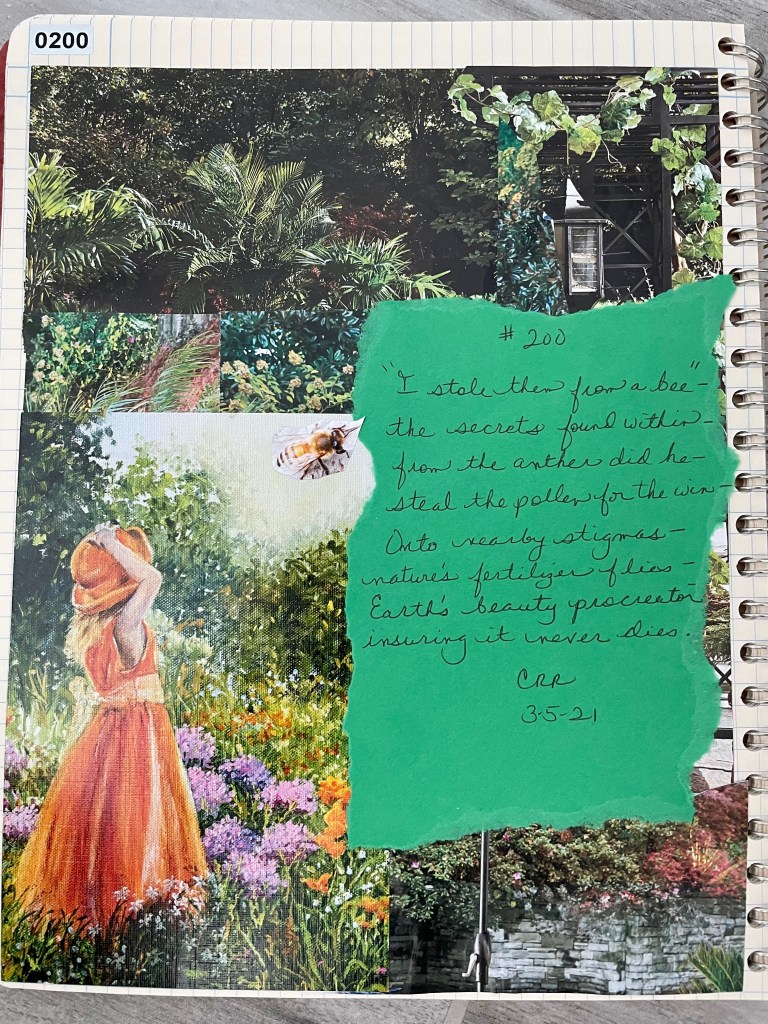
According to the Emily Dickinson Archive, there are 280 instances of bees in poems written by her. There is plenty of analysis out there regarding her personification of bees and flowers etc. and how it speaks of gender conventions, religion and eroticism, but that’s not what this blog is about. It’s widely accepted that she loved nature and spent quite a lot of time by herself in it, thus why so many of her poems contain references to the natural world. Emily no doubt knew of the bee’s importance in contributing to biodiversity, creating a food source, and as pollinators facilitating wild plant growth. Bees are also said to pollinate one-third of the global food supply, more than 90 different agricultural crops.
Like Emily, I find great beauty and solace in nature. It has many valuable lessons and secrets to teach us if we take the time to observe the cycles, habits, and behaviors of other living things. One might surmise that Emily preferred the natural world over human beings, especially toward the end of her life when she became more reclusive. I submit that she sincerely appreciated the contributions of the natural world to the beauty of our planet and took the time to write about it.
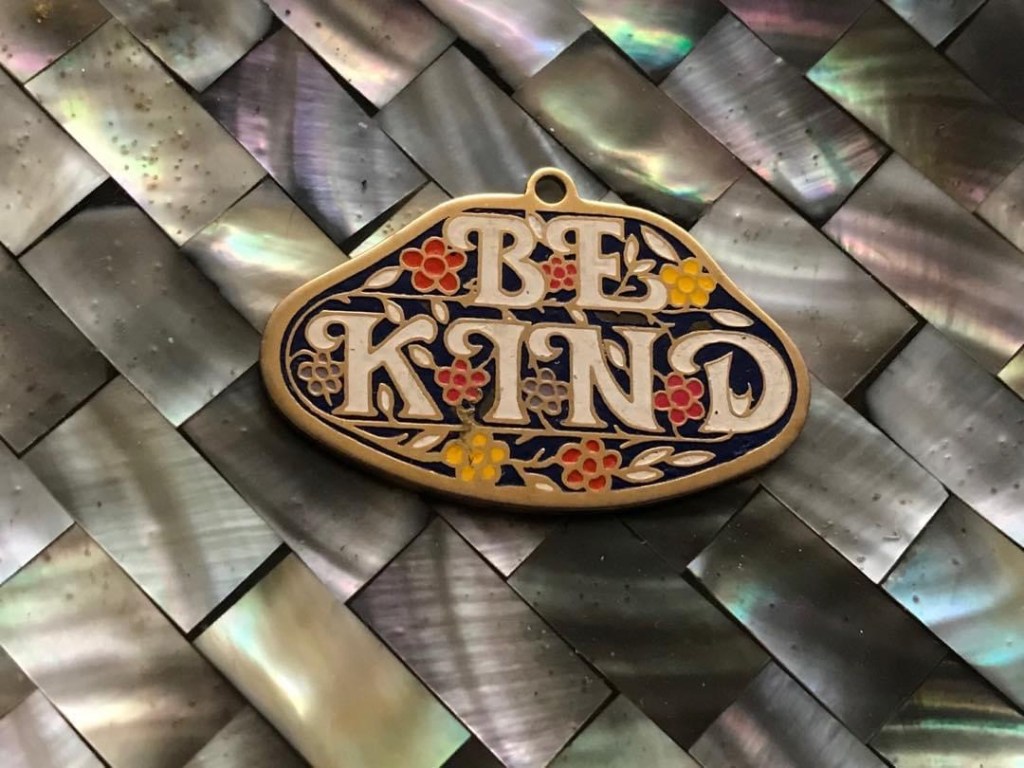
This photo came up as a serendipitous Facebook memory this morning. Serendipitous because I just finished a poem about kindness yesterday, with the intent of posting it today. This “Be Kind” pendant is one of the few relics I have from my teenage years. Three years ago I found it in a box of memories. Although it’s nearly 50 years old, its message is timeless. I remember buying it at The Infinite Mushroom, a really cool head shop in Orlando in the early 70s. It was where every teen went to get their black light posters, ultra-cool clothes/accessories, and of course the other things that made it a “head shop”.
Emily often sent poems as part of her letters or accompanying them, to family, friends and acquaintances. She wrote the first line of this poem in a letter to Samuel Bowles in August of 1858. Bowles was the Editor-In-Chief of the Springfield Republican newspaper. Over the years he became Emily’s confidant and would receive 40 poems in letters from her, but publish none of them. Seven of her poems were published in his paper during her lifetime, but the specifics of how they came to be published remain unknown.
Despite all the goodness and good people that are out there making the world a kinder place every day, today’s Carol and Emily poem recognizes the still ever present need for a “Kindness Revolution”. Because you can never have too much kindness or spread too much love.
In the Spring of 1862, Emily Dickinson wrote the words “The heart wants what it wants, or else it does not care” in a letter to her friend Mary Bowles. She was offering Mary consolation, as her husband was going abroad for an extended period of time. At the same time, Emily admits that there is really no way to console her friend, because the heart has a mind of its own and the friend’s husband will still be missed, even as she is assured of his return.
Throughout Emily’s 55 years she was never known to have a romantic relationship, but the letters she left behind suggest she did have several intimate relationships, which she “tells it slant” about in her poetry. “Tell it slant” was a phrase used in another poem of hers, whose first line is “Tell all the truth, but tell it slant” which seemed to suggest that rather than shocking a person with the whole big truth at once, one should start from a circuit around it and gradually reveal the whole picture. The phrase “tell it slant” has come to be associated with Dickinson and each year the Emily Dickinson Museum in Amherst holds a Tell It Slant poetry festival and gives a Tell It Slant award.
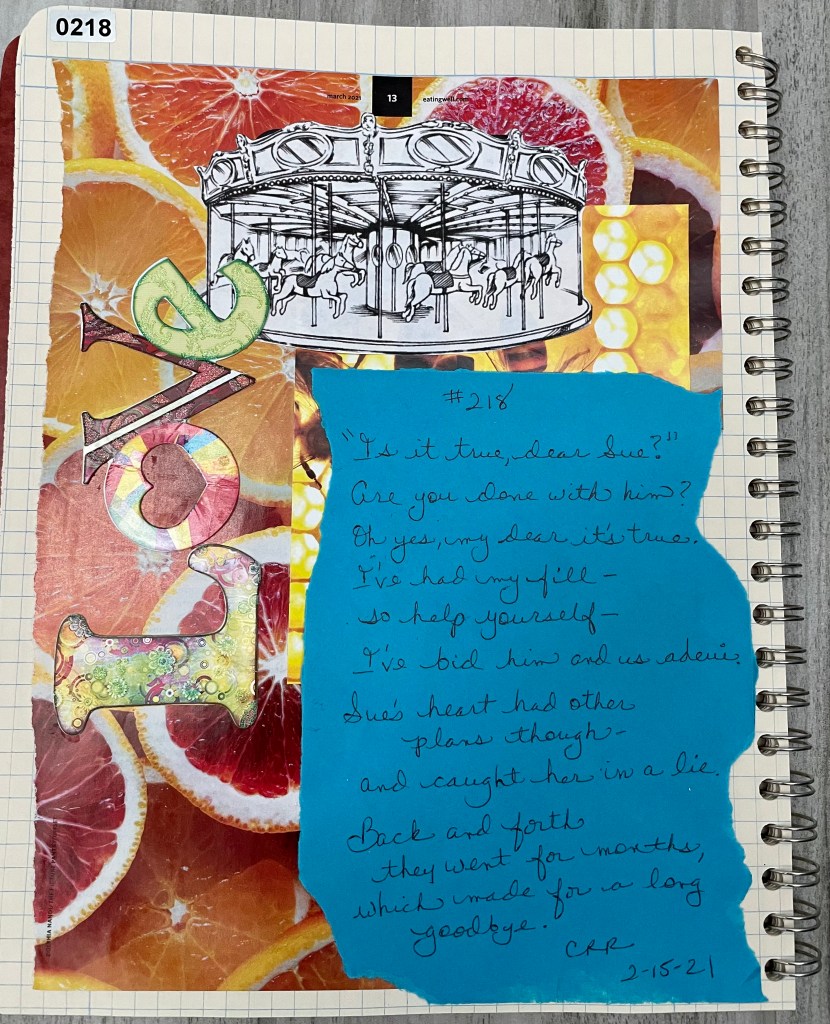
In researching analysis of “Is it true dear Sue?”, most agree that those words were directed to her lifelong friend, love and sister-in-law, Susan Huntington Gilbert with regards to Emily’s brother Austin, whom Sue would go on to marry. Emily is questioning whether or not there are now two who love her, and competing for her love.
Todays Carol and Emily poem is based on a real experience that I had at the end of a long term relationship, one that ended slowly, and slant, but led us both to where we belonged, with another.
“The world is round, and the place which may seem like the end, may also be the beginning.”
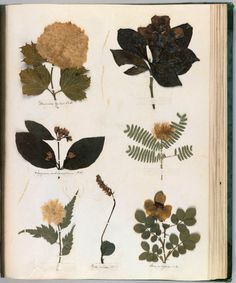
An avid observer, Emily Dickinson began showing an interest in botany when she was 9 years old. She loved to help her mother in the family garden, which contained quite an extensive variety of flowers. When she went away to school at Mt. Holyoke, she was encouraged by the principal and founder of the school to create an herbarium. Emily went on to collect, press and classify 424 flowers from the Amherst region. The leather bound album she pressed and posted them in survived and has been digitized by Houghton Library at Harvard University. You can access it here Harvard Mirador Viewer. You can also tour the Homestead gardens at Dickinson’s family home in Amherst, MA. Although I haven’t yet been, it’s definitely on my “post Covid – when we can finally travel safely again” list of places to visit.
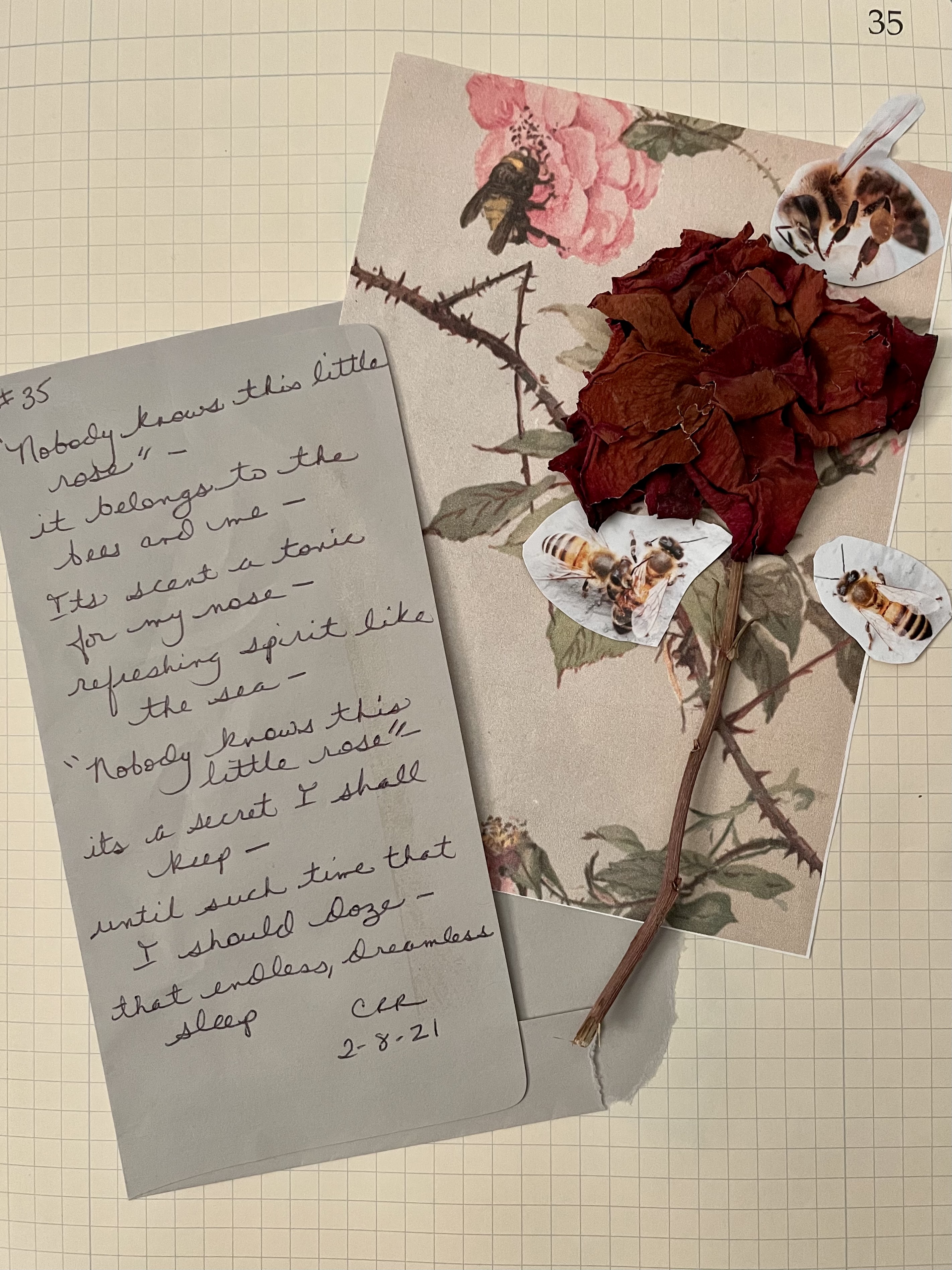
Emily often sent flowers with her letters to friends and family and gifted them on birthdays and occasion of deaths and illnesses. A large number of her poems contain references to them. According to Judith Farr, author of The Gardens of Emily Dickinson, one-third of Dickinson’s poems and half of her letters mention flowers, with the rose taking first place for most mentions. Pictured below is a page from Emily’s Herbarium and today’s Carol and Emily poem, which tells of one particular rosebush that she kept as a secret for herself and the bees.
While it’s true that Emily Dickinson is known as a recluse who hardly ever left her parent’s home in Amherst, Massachusetts, she did in fact have several occasions to travel during her lifetime. *At 17, she was enrolled in Mount Holyoke Female Seminary in South Hadley, Massachusetts, spending a year there. Although she professed in letters to love the entire experience, her longing for home was greater. With her father being a Senator in the Whig party, in 1855, when she was 25, she and her sister Lavinia had the opportunity to visit Washington, DC and Philadelphia. Beyond those two trips, it’s believed that Emily never ventured out into the larger world and is said to have been quite content with her life in Amherst, where she never seemed to run out of inspiration.
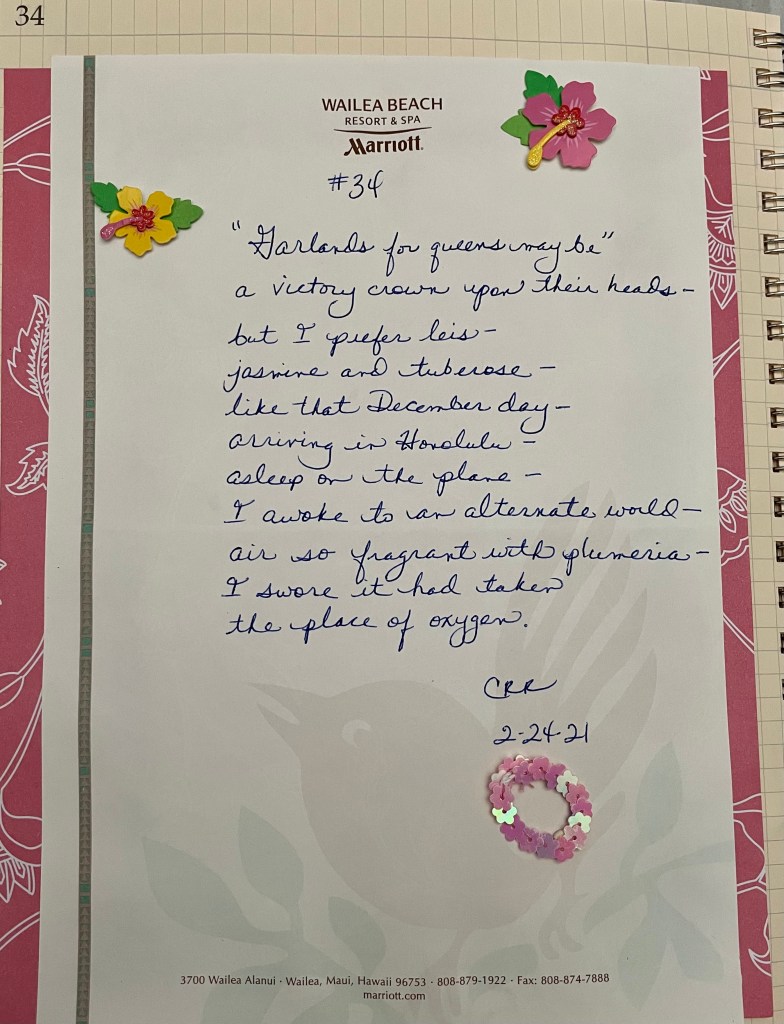
Fast forward 166 years and that’s pretty close to how long it feels like it’s been since the pandemic brought our travel plans to a halt. Travel is “our thing”. My husband and I love to travel to new places and experience new cultures, foods, and vistas. I retired from teaching in June of 2019 and in the 9 months before the pandemic hit , we were lucky enough to take 3 trips and visit 10 different countries. It literally feels like eons ago, but the memories remain. The sights, smells and sounds live on forever in our minds, like those of our honeymoon 15 years ago in Hawaii, where the air is truly rare. Today’s Carol and Emily project remembers that.


 The Carol and Emily Project