
In the Spring of 1862, Emily Dickinson wrote the words “The heart wants what it wants, or else it does not care” in a letter to her friend Mary Bowles. She was offering Mary consolation, as her husband was going abroad for an extended period of time. At the same time, Emily admits that there is really no way to console her friend, because the heart has a mind of its own and the friend’s husband will still be missed, even as she is assured of his return.
Throughout Emily’s 55 years she was never known to have a romantic relationship, but the letters she left behind suggest she did have several intimate relationships, which she “tells it slant” about in her poetry. “Tell it slant” was a phrase used in another poem of hers, whose first line is “Tell all the truth, but tell it slant” which seemed to suggest that rather than shocking a person with the whole big truth at once, one should start from a circuit around it and gradually reveal the whole picture. The phrase “tell it slant” has come to be associated with Dickinson and each year the Emily Dickinson Museum in Amherst holds a Tell It Slant poetry festival and gives a Tell It Slant award.
In researching analysis of “Is it true dear Sue?”, most agree that those words were directed to her lifelong friend, love and sister-in-law, Susan Huntington Gilbert with regards to Emily’s brother Austin, whom Sue would go on to marry. Emily is questioning whether or not there are now two who love her, and competing for her love.
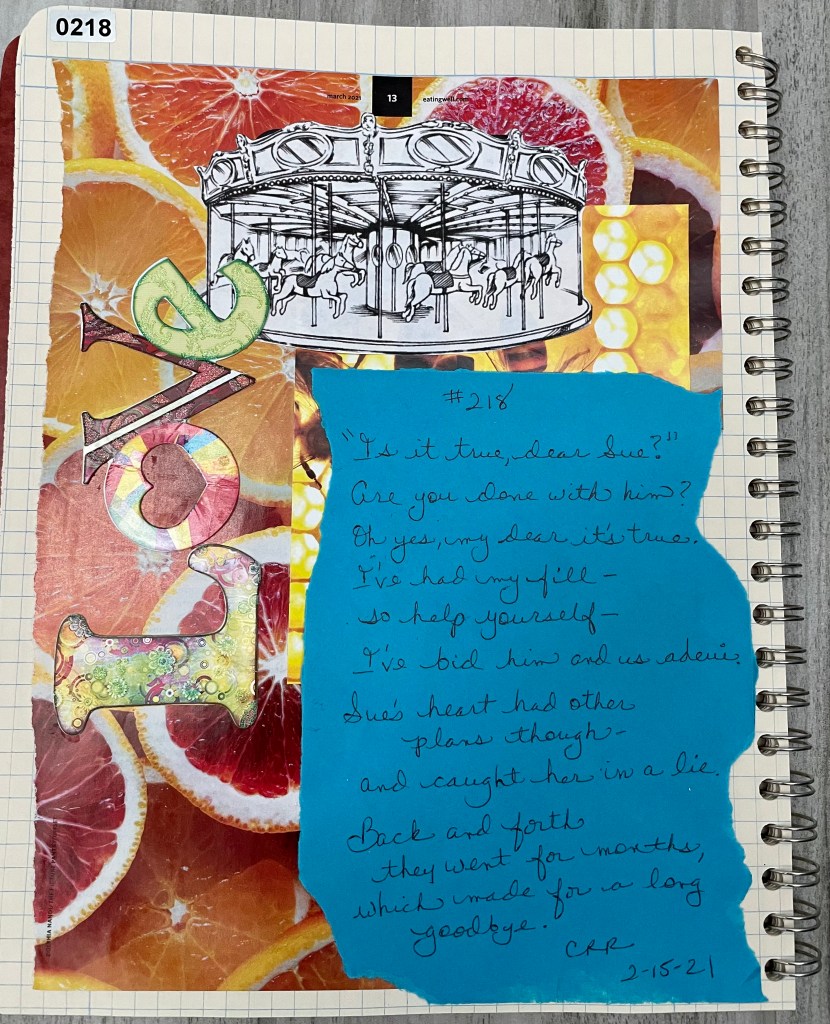
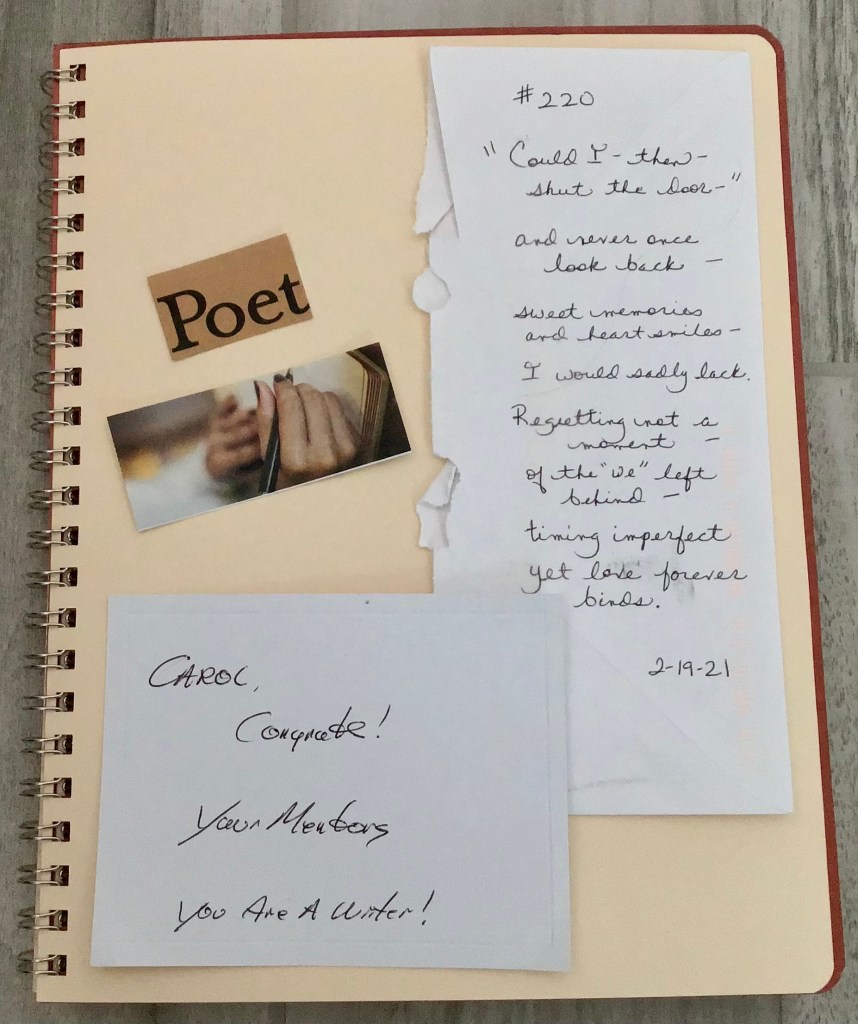
Todays Carol and Emily poem is based on a real experience that I had at the end of a long term relationship, one that ended slowly, and slant, but led us both to where we belonged, with another.
“The world is round, and the place which may seem like the end, may also be the beginning.”
Ivy Baker Priest.
 The Carol and Emily Project